Hair Transplant
Hair transplant clinic software
A hair transplant is often a journey that starts remotely, lasts a few days and is followed for months. HekimBis keeps the donor map, the graft plan and count, standard photography, the consumables record and consented remote follow-up in the same file.
The journey starts remotely and, months later, ends remotely
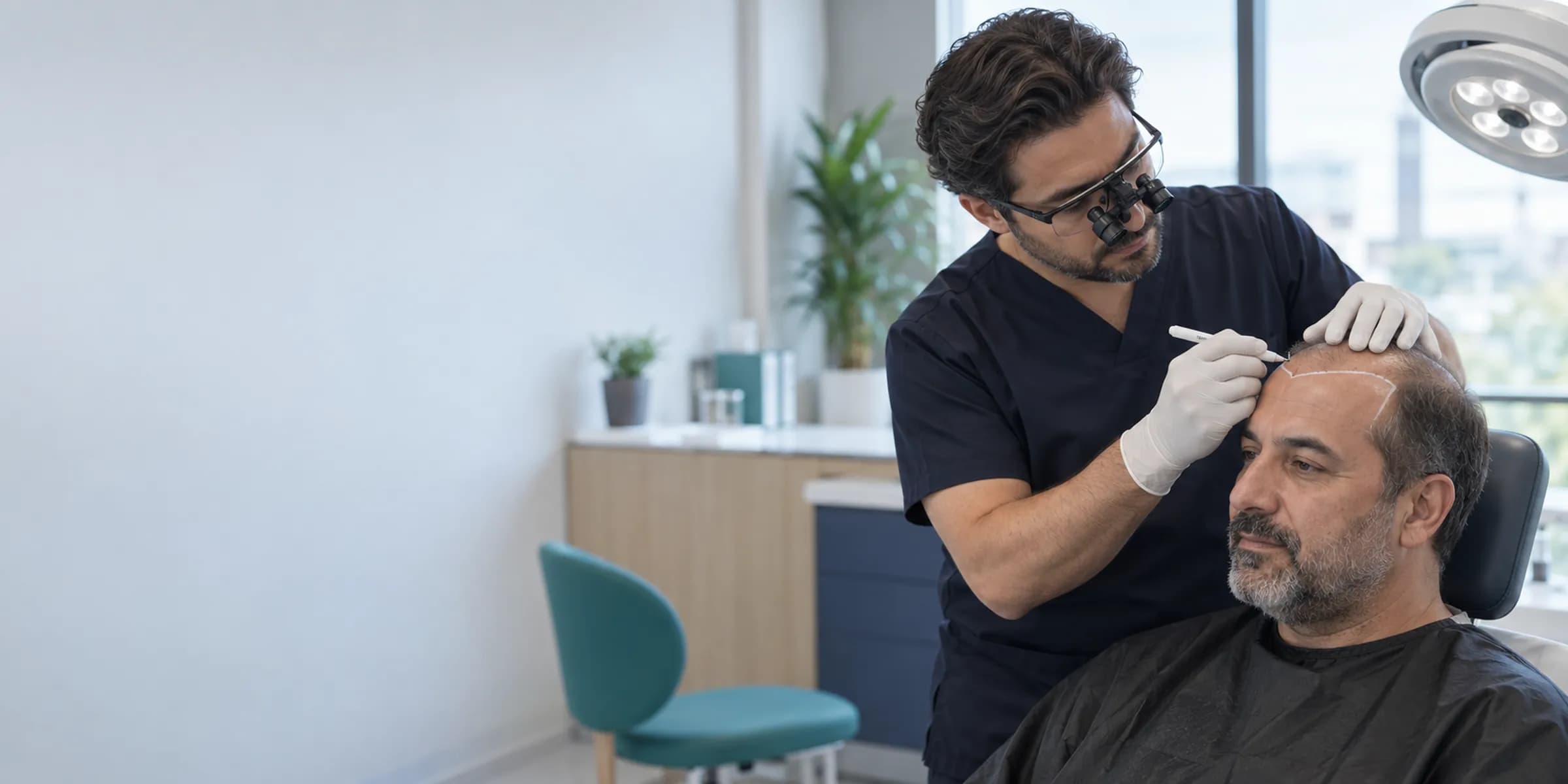
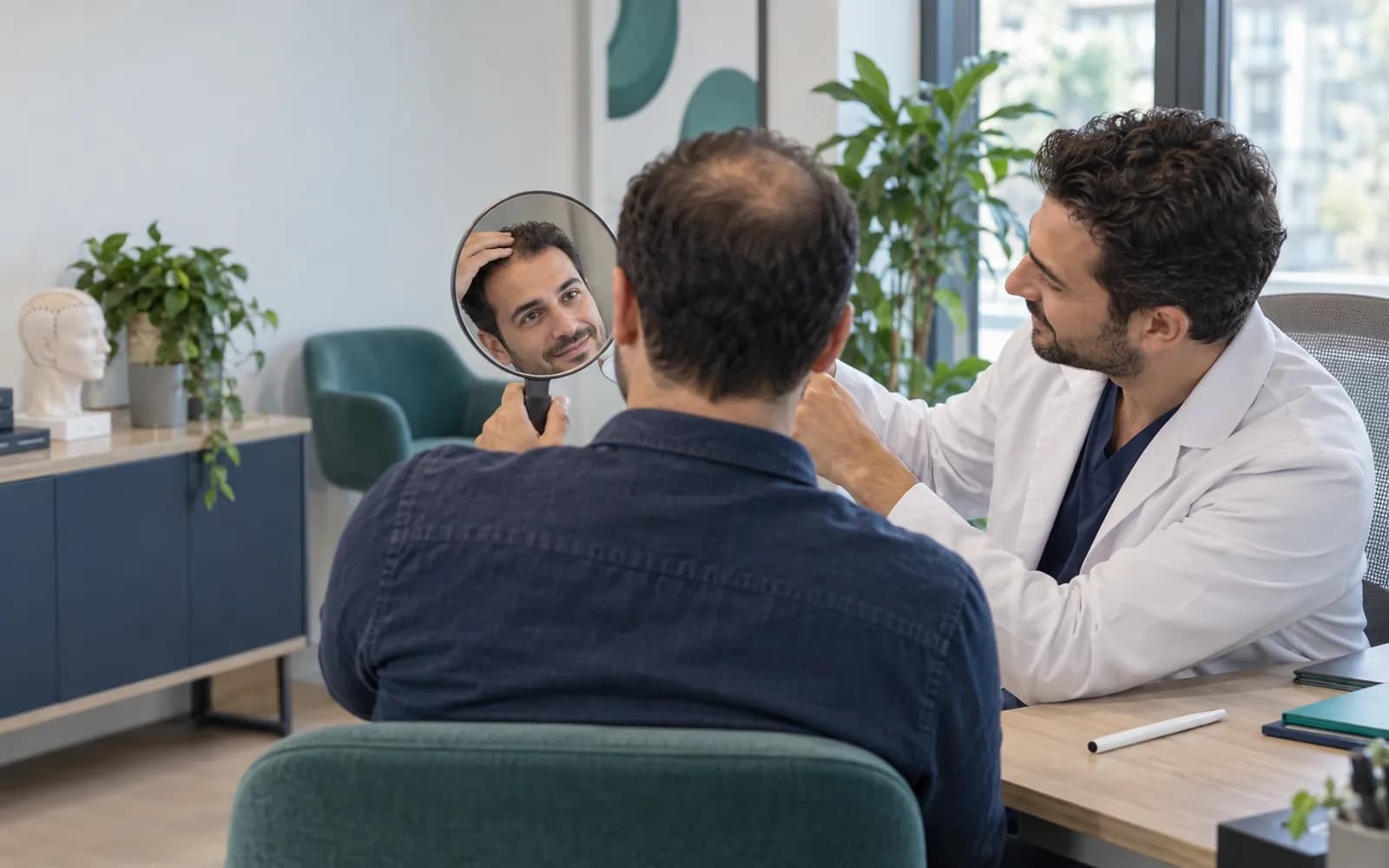
The patient often comes from another country, and the first conversation takes place remotely with photos and forms. The workspace follows the journey from start to finish: pre-assessment, quote and deposit, arrival, procedure day, check-up and remote follow-up. The doctor runs the plan, the team the procedure and the coordinator the logistics, all from the same record.
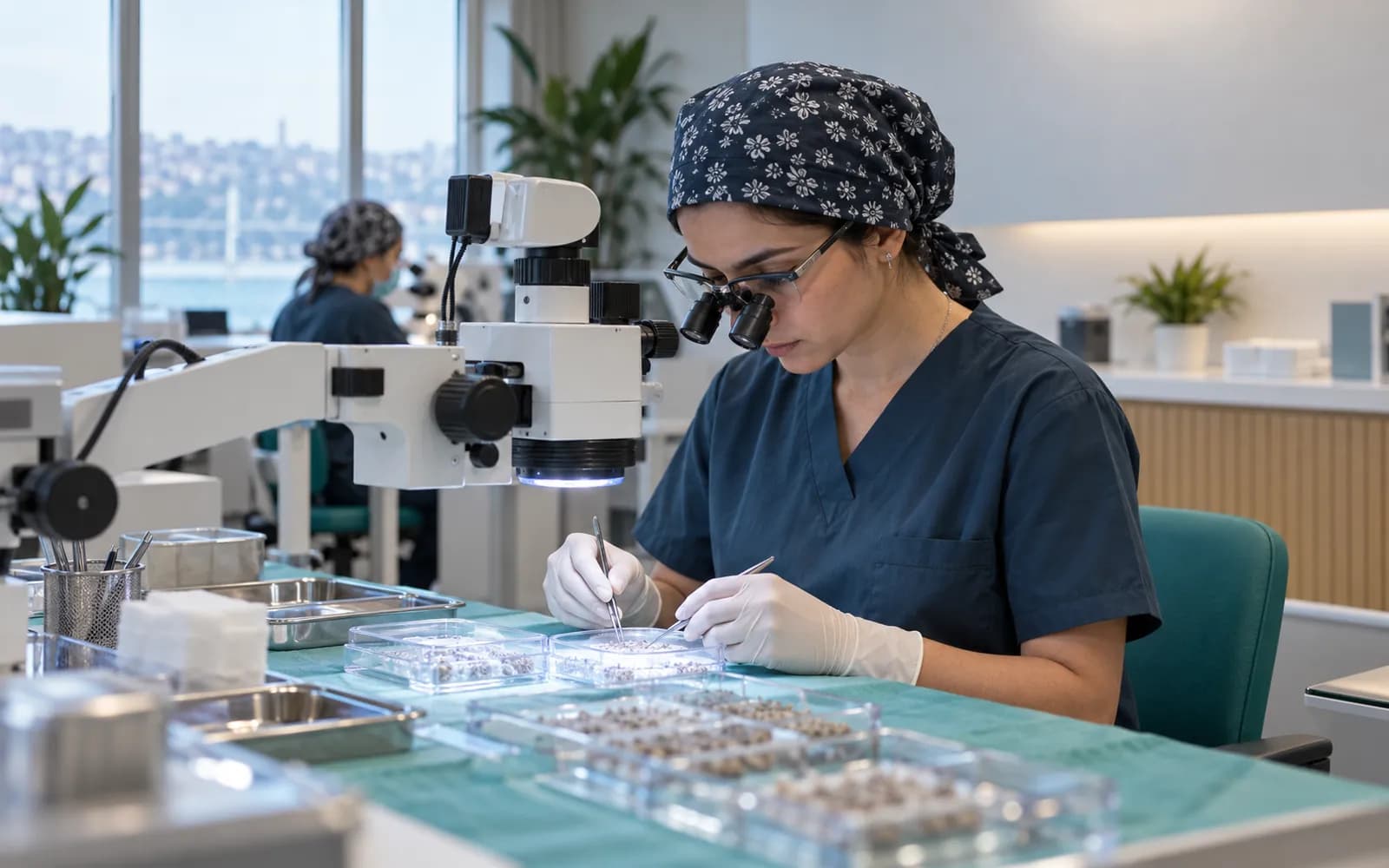
When a patient from abroad sends photos, the coordinator passes the pre-assessment to the doctor and prepares the quote in foreign currency. On arrival the donor map is drawn and the estimated graft count is planned; on procedure day the count updates as zones are completed and the consumables used are deducted from stock. After the patient returns home, follow-up continues with standard-angle photos to the extent the patient consents.
Three workflows of a hair transplant center
- Coordination and quote
- Multilingual first-contact record, quotes in foreign currency, deposits, travel and accommodation tasks; agency permissions and reconciliation are managed in the clinic's own ledger.
- Product and consumables
- Consumables tied to the procedure kit are deducted from stock as they are used; lot and expiry dates are tracked.
- Consented remote follow-up
- To the extent the patient consents, they send photos from their own country; the record, access and duration follow the scope of the consent.
The donor map and graft count update zone by zone
Donor and recipient zones are drawn on a scalp diagram; for each zone the planned and performed graft counts are collected in a table with the distribution of graft types (one, two, three or more hairs). On procedure day the count updates zone by zone and the total and remainder are visible. When you plan a second session, the map of the previous session opens.
- 400 / 800
- 600 / 1100
- 0 / 700
Applied: 1000Planned: 2600Remaining: 1600
- Single-hair280
- Double-hair460
- Triple-hair210
- Four or more50
Table view
| Region | Planned | Applied | Previous session |
|---|---|---|---|
| Frontal line | 800 | 400 | 650 |
| Mid-scalp | 1100 | 600 | 900 |
| Crown | 700 | 0 | 0 |
Names, values and records on screen are examples prepared for illustration.
The protocol starts within days and runs for months
Remote pre-assessment
A consented preliminary conversation takes place with photos and a form.
Quote and deposit
The quote in foreign currency, the deposit and the cancellation rule enter the record.
Arrival and planning
The donor map, graft plan and consent are prepared.
Procedure days
Zone-by-zone procedure, count and consumables are recorded.
First check-up
Aftercare instructions are given and the first check-up visit takes place.
Remote follow-up period
Consented photo follow-up and check-up reminders continue.
A standard photo series
Photos taken from the same angle and in the same light are shown side by side before the procedure, at check-up and during remote follow-up. A separate photo consent is obtained for sharing or promotional use; without a consent record the image stays in the clinical record.
- Pre-procedure, check-up and remote follow-up images are compared at the same angle
- Photo consent is visible in the record
In the patient's own language
Patient surfaces (portal, forms, notifications) are available in Turkish, English, Arabic, Russian and German, and the team screen runs in Turkish and English. Form and consent translations are approved by people. Remote pre-assessment, quotes and deposits in foreign currency, and agency and interpreter permissions are part of the health tourism capability.
- Türkçe
- English
- العربية
- Русский
- Deutsch
Hair transplant device surface
The center's device surface is simple: the outputs of standard photography and treatment devices attach to the file.
- Standard photography setup
- Photos are added to the series in order.
- Trichoscope and dermatoscope
- The image attaches to the patient file.
- Treatment device outputs
- The session summary is added as a file.
- Barcode reader
- The consumables label is scanned.
Common questions about hair transplant software
Is there a separate definition for hair transplants?
Yes. Hair Transplant is a separately defined sub-pack under Medical Aesthetics and Plastic Surgery: donor map, graft planning and count, multi-day protocol, standard photos, product and consumables, and consented remote follow-up. It is versioned and passes two separate clinical sign-offs before release.
How does remote follow-up work?
With their own consent, the patient sends standard-angle photos from their country; the record follows the scope and duration of the consent. If consent is withdrawn, the affected entries become visible.
How is commission tracked when working with agencies?
An agency sees only the data it is authorized for; commission accrual and reconciliation are kept in the clinic's own ledger.
Can photos be shared?
With a separate photo consent they can. Without a consent record the image stays in the clinical record.
Are my devices supported?
Device connections are verified per manufacturer, exact model, protocol and version, and the verified ones are listed. A file from a device that is not on the list is imported with a note that it is not integrated.
Keep reading
Related pages
Features
Specialties
Solutions and process
Software guides
Integrations