Endocrinology and Diabetes
Endocrinology and diabetes clinic software
The real data of diabetes care is not made in the clinic but at the patient's home. HekimBis gathers home measurements, lab results and medication changes on one timeline, so you meet a patient at a check-up already seeing how the readings have moved.

You see the weeks between visits as well
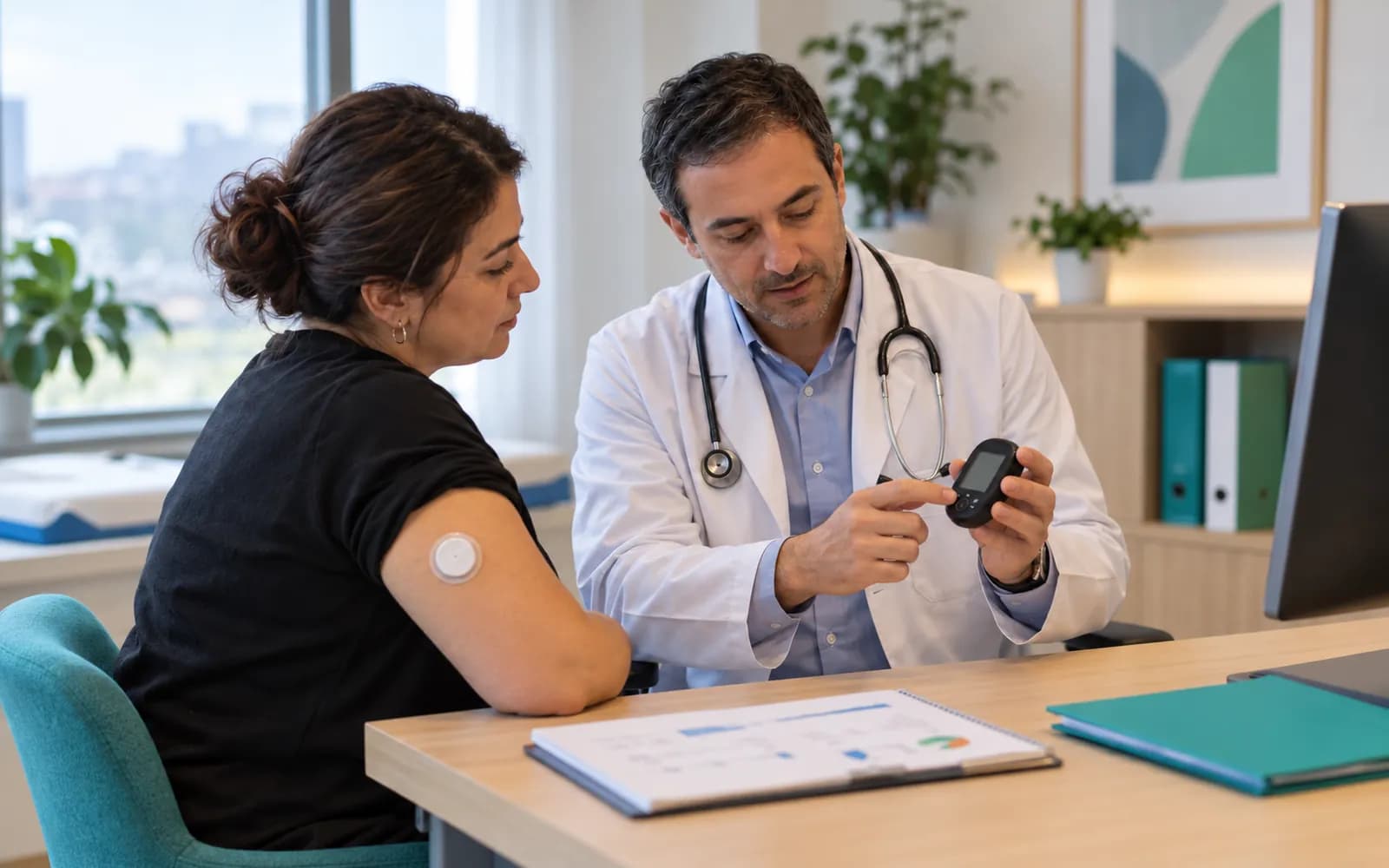
A check-up every three months does not show what happened between two of them. HekimBis closes that gap by adding home measurements to the record: readings from devices in the verified device matrix are marked separately from those entered by hand or by file. You interpret the glycemic course, HbA1c, the medication change and the care goal on the same screen.
The last six weeks of readings of a patient at a check-up sit on the curve. You see that night values rise while the afternoon stays within the target band. When you change the dose, the change appears as a mark on the trend line; care goals are updated and the next check-up and test order are scheduled as reminders.
The glycemic course is followed by day and over the long term
Home measurements come in two views. The daily view overlays readings from different days on a time-of-day axis and draws the median line and target band. The long-term view places HbA1c values and medication start, dose change and stop marks along a date axis. You set the target band for each patient.
Table view
| Value | 0 | 3 | 6 | 7 | 9 | 12 | 13 | 15 | 18 | 19 | 21 | 24 |
|---|---|---|---|---|---|---|---|---|---|---|---|---|
| Median | 96 | 111 | 113 | 158 | 175 | 104 | 166 | 137 | 142 | 203 | 154 | 128 |
Names, values and records on screen are examples prepared for illustration.
Six workflows of diabetes care
- Home measurement record
- Readings from devices in the verified device matrix are marked apart from those entered by hand.
- HbA1c and lab relationship
- Lab results appear on the same timeline as HbA1c and other parameters.
- Medication and dose history
- Medication start, dose change and stop entries are drawn on the trend line.
- Care goal
- Goals and to-dos are kept per patient as a plan and shared in the portal once the doctor approves.
- Follow-up reminders
- Patients due for a check or screening are listed, and a patient who does not come generates a task.
- Patient education documents
- Instructions for measurement and medication come from templates and attach to the record.
The yearly rhythm of diabetes care
Diagnosis and care goal
Goals are written for the patient.
Medication plan and education
Medication, dose and the patient education note enter the record.
Home measurement period
Measurement frequency and device source are recorded.
Follow-up visit
HbA1c, lab results and the measurement review are assessed together.
Screening checks
Complication screenings that are due are listed as reminders.
Plan revision
Goals and medication are updated and the change is tracked.
Connected while the patient is at home
The patient portal shows the care plan and goals you approve. Measurement reminders and follow-up calls go out according to the patient's communication preference, and messages carry no health data. You can define rules for extreme values: a rule produces a task and notification, and any action involving a clinical decision waits for your approval.
- Measurement and follow-up reminders
- Rule-based tasks and escalation; a rule can first be tried in test mode
- Patient notification of a plan change goes out with the doctor's approval
A verified device matrix
In diabetes care, device data has to be trustworthy, so only verified entries count as integrated.
- Glucose meters and continuous sensors
- Measurements within the verified device matrix come from the device; others are entered by hand.
- Lab analyzers and LIS
- HbA1c and other parameters attach to the file.
- Wearable devices
- Those with a verified matrix entry are connected; others are taken as files.
- Vital sign devices
- Blood pressure, pulse and weight readings are carried into the visit.

Common questions about diabetes follow-up software
Is there a separate profile for diabetes care?
Yes. Endocrinology and Diabetes is a separate defined clinical profile in the internal medicine family: glycemic trend, home measurement, medication and care goal. It is versioned and passes two separate clinical sign-offs before release.
Does glucose meter data arrive automatically?
For the manufacturer, model, protocol and version entries in the verified device matrix, yes. Measurements from other devices can be entered by hand or taken as a file, and they are marked as not integrated.
Does the system determine the insulin dose?
The system shows the measurement, the trend and the medication record; the treatment decision belongs to the clinician.
Can the patient see their own measurements?
The plan and results you approve are published in the patient portal. Notifications carry no health data and include a secure link.
Can it be used together with the internal medicine profile?
Yes. The same clinic can use several packs together, and the patient stays in one file.
Keep reading
Related pages
Features
Specialties
Software guides